

Every single day, over 2,200 cyber attacks target online platforms according to the US Cybersecurity & Infrastructure Security Agency. This staggering number shows how vulnerable digital spaces have become.
Website security refers to comprehensive measures that safeguard your online presence. It protects against hackers, malware, scams, and phishing attempts. These threats can compromise your entire digital operation.
The financial impact is equally alarming. For small and medium-sized businesses, 95% of cybersecurity incidents cost between $826 and $653,587. This demonstrates why investing in protection now is far more cost-effective than dealing with a breach later.
Proper safeguarding goes beyond preventing unauthorized access. It maintains business operations and preserves customer trust. Protecting sensitive data ensures your site remains available to legitimate users.
Key Takeaways
- Cyber attacks occur over 2,200 times daily, making protection essential
- Comprehensive security involves multiple layers of defense against various threats
- Small businesses face significant financial risks from cybersecurity incidents
- Protecting your online presence maintains customer trust and business continuity
- Security requires ongoing assessment and adaptation, not just a one-time setup
- Effective protection combines multiple measures working together like layers
- Every online platform needs proper safeguarding regardless of size
-
Click here to have a conversation with a website security expert
Understanding Website Security Fundamentals
Modern digital environments demand more than just password protection; they require comprehensive defensive strategies that evolve with emerging threats. I view this as the foundation for building effective online protection.
Defining website security in today’s digital landscape
Website security represents a comprehensive set of protective measures designed to safeguard online platforms. It encompasses defense against hackers, malware, data breaches, and various malicious activities.
The approach has evolved significantly from basic password systems. Today’s landscape requires a multi-layered strategy addressing sophisticated threats. This evolution reflects the growing complexity of digital risks.

The importance of continuous security assessments
Protection is never a set-it-and-forget-it solution. It requires constant assessment and adaptation to stay ahead of emerging vulnerabilities. The US Cybersecurity & Infrastructure Security Agency warns that attacks are increasing in both number and severity.
I recommend viewing protection holistically, like an onion with many layers. Each layer works together to form one comprehensive system. Continuous assessments help identify new weaknesses before attackers can exploit them.
This ongoing process ensures your defensive measures remain effective as threats evolve. Understanding these fundamentals builds the foundation for all other protective strategies.
Why Website Protection is Critical
When cyber criminals target your online presence, they’re not just attacking code—they’re threatening your livelihood. I’ve seen businesses lose everything from a single security incident. The damage extends far beyond immediate financial losses.

Mitigating cyber threats and risk
Malicious attacks can completely eliminate income streams. Hackers have various motivations behind their actions. Some seek financial gain through stolen data.
Others want to abuse server resources or cause damage for notoriety. These threats target not just your platform but also your visitors. They may redirect users to scam sites or distribute malware.
Protecting sensitive information from breaches
Data exposure represents one of the most severe risks. Confidential information becomes vulnerable during breaches. This includes financial records, medical data, and customer details.
Protecting this information maintains the trust customers place in you. It’s about more than avoiding fines or lawsuits. It preserves your reputation and business credibility long-term.
| Threat Type | Primary Motivation | Business Impact |
|---|---|---|
| Data Theft | Financial Gain | Lost revenue, lawsuits, fines |
| Service Abuse | Resource Theft | Performance issues, extra costs |
| Platform Defacement | Notoriety/Damage | Reputation harm, customer loss |
The table above shows how different attacks create unique challenges. Each requires specific protective measures. Understanding these helps build effective defense strategies.
Embracing a Defense in Depth Strategy
The most effective way to protect online platforms is through a comprehensive strategy that builds redundancy into every aspect of protection. I view this as creating multiple barriers that work together like an onion’s layers.
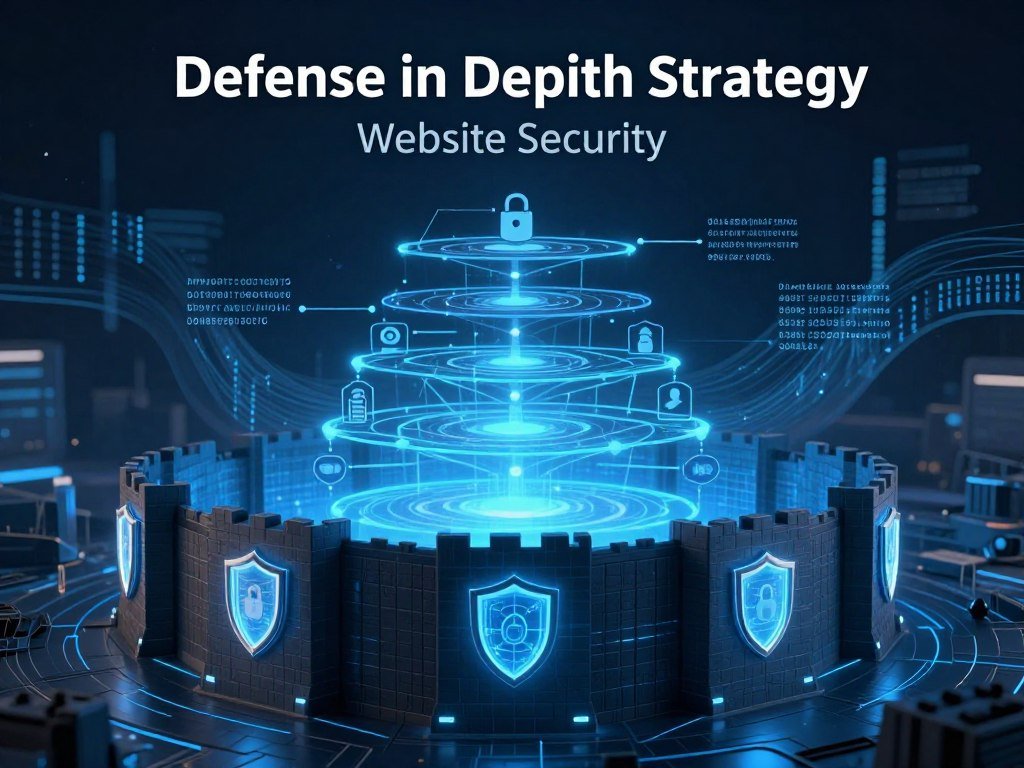
This systematic approach ensures that if one safeguard fails, others remain active. It creates a resilient framework against various threats.
Layers of protection explained
Each defensive layer serves a distinct purpose. Outer barriers stop threats before they reach your server. Intermediate layers detect intrusions that slip through.
Inner protections safeguard core resources even if external defenses are breached. This multi-faceted approach prevents single points of failure.
| Defense Layer | Primary Function | Key Components |
|---|---|---|
| External | Threat Prevention | Firewalls, traffic filtering |
| Intermediate | Intrusion Detection | Monitoring tools, WAFs |
| Internal | Damage Containment | Access controls, hardening |
Real-world applications of a multi-layered defense
Consider password protection alone versus layered access control. Even if credentials are compromised, multi-factor authentication provides another barrier.
IP restrictions and activity monitoring add further protection. This redundancy is essential because no single measure is completely foolproof.
Human factors also play a crucial role. Employee training and clear policies form vital non-technical layers in this comprehensive strategy.
Exploring Common Web Attacks and Vulnerabilities
Attackers constantly probe digital platforms for weaknesses, seeking entry points most owners never notice. I’ve identified several recurring patterns that threaten online operations.
SQL injections, cross-site scripting, and other vulnerabilities
SQL injection attacks manipulate databases by inserting malicious code into input fields. This bypasses normal protections to access sensitive information directly.
Cross-site scripting vulnerabilities allow attackers to inject executable scripts into your platform’s code. These scripts can steal visitor data or impersonate legitimate users.
Credential brute force attacks use automated programs to test millions of password combinations. Weak passwords become easy targets for these persistent attempts.
The impact of denial of service and automated attacks
Denial of service attacks overwhelm servers with massive traffic volumes. They render platforms unavailable to legitimate visitors.
Distributed denial of service attacks come from multiple sources simultaneously. Blocking one source has little effect when hundreds continue the assault.
Most modern threats operate through automated systems. Bots constantly scan for vulnerabilities, meaning even small platforms face constant risks.
| Attack Type | Primary Method | Key Impact |
|---|---|---|
| SQL Injection | Database manipulation | Data theft or destruction |
| Cross-site Scripting | Code injection | User impersonation, data collection |
| Brute Force | Password testing | Unauthorized access |
| DDoS | Traffic overload | Service disruption |
Successful attacks lead to SEO spam injections, backdoor installations, and cryptocurrency mining. Understanding these methods helps build effective defenses.
Implementing Website Security Best Practices
Implementing effective safeguards involves deploying multiple layers of defense, starting with essential tools and regular maintenance. I focus on practical measures that provide immediate protection while building long-term resilience.
Utilizing web application firewalls and security patches
A web application firewall acts as my first line of defense. It filters all incoming traffic and blocks malicious requests before they reach my platform. This application firewall can virtually patch vulnerabilities immediately after discovery.
Applying security patches promptly is equally critical. Outdated software becomes an easy target for automated attacks. I prioritize updates as soon as they become available.
Regular updates and monitoring to prevent breaches
I maintain a strict schedule for checking and applying all software updates. Monthly or weekly intervals aren’t sufficient against constant bot scanning. Immediate action prevents exploitation of newly discovered weaknesses.
Comprehensive monitoring helps detect suspicious activity early. Automated backups provide a safety net for quick recovery if incidents occur. These practices work together to minimize risks effectively.
| Update Type | Recommended Frequency | Key Benefits |
|---|---|---|
| Critical Security Patches | Immediately | Prevents exploitation of known vulnerabilities |
| Plugin & Theme Updates | Within 24 hours | Maintains compatibility and closes security gaps |
| CMS Core Updates | Weekly | Ensures platform stability and latest features |
| Full System Backups | Daily | Provides recovery option for any incident |
Strengthening Login Security and Password Management
The gateway to any digital platform begins with login credentials, making password management a critical first line of defense. I focus on creating robust authentication systems that prevent unauthorized entry.
Establishing a strong password policy
Weak passwords like “admin/admin” offer virtually no protection against determined attackers. I implement policies requiring strong passwords longer than 12 characters with complete randomness.
Hackers use automated programs that test millions of combinations in minutes. Dictionary words and common patterns become easy targets for these brute force attacks.
| Password Characteristic | Weak Example | Strong Example |
|---|---|---|
| Length | 8 characters | 16+ characters |
| Complexity | Common words | Random characters |
| Uniqueness | Reused across sites | Unique per account |
I recommend password managers like LastPass to generate and store encrypted passwords. This makes maintaining unique, complex credentials practical for every login.
Benefits of multi-factor authentication
Multi-factor authentication adds crucial protection by requiring two verification methods. Even if attackers obtain my password, they cannot gain access without the second factor.
This typically involves a password plus a one-time code from an authentication app. I implement this for all user accounts to significantly reduce breach risks.
Securing Ecommerce Platforms and Meeting Compliance
Ecommerce platforms face unique challenges when handling sensitive financial transactions that demand specialized protection measures. I focus on implementing comprehensive safeguards that protect both customer trust and regulatory requirements.
Protecting credit card data and sensitive transactions
The Payment Card Industry Data Security Standards (PCI-DSS) outline specific requirements for securing cardholder information. These standards apply to all forms of data handling—digital, written, or spoken.
I must never store certain sensitive data elements under any circumstances. This includes full magnetic stripe data, expiration dates, service codes, PIN codes, and CVV digits. Only cardholder names may be retained if necessary for business operations.
| Data Element | Storage Status | Reason |
|---|---|---|
| Full magnetic stripe data | Never store | High risk of fraud |
| CVV digits | Never store | Verification only |
| Cardholder name | May store if needed | Low risk, operational value |
| Expiration dates | Never store | Authentication factor |
Credit card information must pass from browser to server using HTTPS encryption. I ensure proper encryption during storage and transmission to third-party processors.
Understanding PCI compliance regulations
Hackers constantly attempt to intercept payment data whether at rest or in transit. Compliance isn’t just about avoiding fines—it’s about maintaining customer trust.
Failure to secure ecommerce platforms properly can result in massive fines, lawsuits, and permanent damage to business reputation.
I implement SSL certificates, secure payment gateways, and regular audits. This comprehensive approach protects both my operations and customer financial information.
Fortifying Web Applications and Server Configurations
When multiple applications share server resources without proper isolation, a single breach can cascade through the entire infrastructure. I focus on hardening both my server environment and application code to prevent this domino effect.
Managing plugins, themes, and server permissions
Each plugin or theme I install represents a potential vulnerability. I carefully vet extensions before adding them to my web application. Unused components get removed immediately to reduce the attack surface.
File permissions control access to critical server files. I set permissions like 640 to give owners read/write access while restricting public access completely. This prevents unauthorized modifications to my application code.
Best practices for server, file, and network security
I follow the Principle of Least Privilege for all server configurations. Users receive only the minimum access needed for their specific roles. This limits damage if credentials get compromised.
Default CMS settings get changed immediately after installation. Attackers know standard configurations, so customizing them adds an essential layer of protection. Network access points remain restricted to authorized connections only.
Regular audits of server logs and permission settings help me maintain ongoing vigilance. This proactive approach ensures my applications stay protected against evolving threats.
Monitoring, Logging, and Incident Response
My incident response strategy begins long before any actual incident occurs, built on a foundation of meticulous monitoring and documentation. This proactive approach ensures I’m prepared when unexpected events disrupt my digital operations.
Establishing effective security logging and monitoring
I maintain comprehensive logs recording all activity on my platform. This includes IP addresses, user actions, login attempts, and file changes. These records provide crucial forensic evidence when I need to understand what happened during an incident.
Continuous monitoring helps me spot unusual patterns early. A sudden spike in registered users might indicate spammers exploiting a vulnerability. I watch DNS records, SSL certificates, and file integrity for any unauthorized changes.
Strategies for incident detection, containment, and recovery
My response process follows four key phases. Preparation involves having tools and a designated team ready. Detection requires quick identification of various attack types and understanding attacker intent.
Containment strategies adapt to the specific threat. Cryptominer infections consuming server resources demand immediate action to prevent system depletion. Recovery focuses on restoring normal operations while learning from the experience.
Post-incident analysis is critical for improvement. I document what occurred, what actions worked, and how to prevent similar issues. Regular drills ensure my team knows exactly what to do during real emergencies.
Building a Holistic Security Framework
A truly resilient digital defense requires more than just technical tools—it demands a systematic framework that guides every decision. I follow the NIST Cybersecurity Framework because it provides a comprehensive structure for managing protection systematically.
This approach begins with understanding what needs safeguarding. I cannot protect resources I don’t know exist.
Integrating the Identify, Protect, Detect, Respond, and Recover approach
The Identify phase involves cataloging all digital assets. This includes web properties, servers, plugins, and third-party services. Knowing exactly what I have allows me to place appropriate safeguards.
Protect means implementing preventative measures discussed throughout this guide. Firewalls, access controls, and encryption form my first line of defense.
Detection requires continuous monitoring and scanning. Quick alerts help me respond before significant damage occurs. Response procedures include containment strategies and communication plans.
Recovery planning goes beyond restoring backups. I conduct post-incident reviews and consult with vendors to improve weak areas. This ensures continuous improvement in my protective measures.
Cultivating a culture of security within your organization
Effective protection requires more than technology—it needs cultural adoption. Every team member must understand their role in maintaining safety. Security becomes everyone’s responsibility, not just the IT department’s concern.
Scheduled audits help maintain this framework effectively. They identify gaps as my business evolves. Leadership commitment and adequate resources ensure this culture thrives throughout the organization.
Leveraging Website Security to Enhance Business Credibility
Strong protection measures do more than prevent attacks—they build customer confidence in your brand. I view this as a strategic advantage that separates serious businesses from casual operators.
Improving user trust and brand reputation
Customers today actively seek out companies that demonstrate commitment to safety. When visitors see HTTPS and trust badges, they feel more comfortable sharing personal information.
A single major incident can destroy years of reputation building. I prioritize protection because 72% of professionals worry about attacks on client sites. This concern reflects real risks that affect customer perception.
Optimizing SEO as a result of robust website security measures
Google’s algorithms now reward safe platforms with better search rankings. HTTPS and SSL certificates have become direct ranking factors in their system.
This creates a clear connection between protection and organic traffic growth. Secure sites avoid search engine penalties that can devastate visibility.
Investing in comprehensive safeguards delivers multiple business benefits. It builds trust, protects reputation, and improves search performance simultaneously.
Conclusion
I view comprehensive protection as an ongoing investment in my business’s resilience. Maintaining effective website security requires constant attention rather than a one-time setup. New vulnerabilities emerge daily, demanding my continuous vigilance.
Preparation remains essential for any digital operation. I make sure to have recovery plans and communication strategies ready. If data becomes compromised, prompt notification protects customer trust and meets regulatory requirements.
While risk can never reach zero, diligent protection dramatically reduces threats. I treat security measures as fundamental to my business success rather than an optional expense. This approach safeguards my digital assets and ensures long-term operational continuity.