

Did you know that 94% of cyberattacks start with email phishing? This shocking statistic reveals how vulnerable our digital systems really are. I see businesses face security threats every day, and many don’t realize their weaknesses until it’s too late.
That’s why I rely on penetration testing as my frontline defense. This proactive approach simulates real attacks on my systems to find security gaps before criminals do. It goes far beyond basic vulnerability scans.
Unlike automated tools that just list problems, my security testing actively exploits weaknesses. I learn exactly how attackers could breach my defenses. This gives me a true picture of my risk level.
Key Takeaways
- simulates real attacks to find security weaknesses
- It goes beyond basic scans by actively exploiting vulnerabilities
- This approach protects sensitive data and maintains customer trust
- It shows how multiple security gaps could work together
- Regular testing ensures ongoing protection for your systems
- Proactive security measures prevent costly breaches
- Actionable results help prioritize security improvements
I use this method to protect sensitive data and maintain customer trust. It helps me understand how different vulnerabilities could work together against my systems. This guide shares my complete approach to effective security assessments.
Introduction to Penetration Testing
Many people confuse ethical hacking, but there’s an important distinction. Ethical hacking represents the broader discipline of using hacking skills for defensive purposes. It includes various security services beyond just penetration tests.
View vulnerability report
Understanding Ethical Hacking and Its Benefits
I define ethical hacking as the disciplined practice of using hacking tools to strengthen security. This approach distinguishes itself from malicious cybercrime. While ethical hackers may provide malware analysis and risk assessment, specifically simulates real-world attacks against my systems.
The benefits are substantial. I gain comprehensive security coverage and realistic threat simulation. This validation of my existing controls provides actionable intelligence for improving defenses.
“Ethical hacking turns the attacker’s methods into defensive strengths, creating a proactive security posture.”
My Approach to Identifying Vulnerabilities
My methodology begins with understanding the crucial difference between vulnerability assessments. Vulnerability scans use automated tools to identify potential weaknesses. Penetration tests go further by actively exploiting those weaknesses to understand real impact.
I combine automated and manual techniques to uncover both known and unknown vulnerabilities. This approach eliminates false positives and provides concrete evidence of what attackers could accomplish.
| Assessment Type | Methodology | Depth of Analysis | Result Accuracy |
|---|---|---|---|
| Vulnerability Assessment | Automated scanning | Surface-level identification | Potential false positives |
| Penetration Testing | Manual exploitation | Deep impact analysis | Verified real threats |
My systematic approach starts with mapping potential entry points. I prioritize targets based on business risk and potential impact to my company. This ensures I focus on the most critical security gaps first.
Essential Tools and Techniques for Security Testing
Effective vulnerability discovery requires both automated efficiency and human insight. My security assessments rely on a carefully selected toolkit that combines specialized operating systems with targeted exploitation frameworks.

Automated Tools and Specialized Operating Systems
I begin with Kali Linux as my primary operating system. This specialized platform comes preloaded with essential security instruments like Nmap and Wireshark.
Automated scanners provide the foundation for my work. I use tools like Nessus for vulnerability detection and Burp Suite for web application analysis. These programs quickly identify known weaknesses across my systems.
| Tool Category | Primary Function | Key Examples |
|---|---|---|
| Port Scanners | Identify open network ports | Nmap, masscan |
| Vulnerability Scanners | Detect known security gaps | Nessus, Netsparker |
| Credential Testers | Assess authentication strength | Hydra, Hashcat |
View vulnerability report
Manual Techniques and Exploitation Frameworks
While automation handles broad scanning, manual techniques uncover subtle vulnerabilities. I combine automated results with hands-on analysis for comprehensive coverage.
Metasploit serves as my main exploitation framework. Its library of prewritten codes allows me to simulate realistic attack scenarios efficiently. I also use packet analyzers like Wireshark to examine network operations.
“Automation finds the obvious vulnerabilities, but manual testing discovers what machines overlook.”
This balanced approach ensures I miss nothing during security evaluations. The combination of speed and depth provides complete protection assessment.
Setting the Scope: Black-Box, White-Box, and Gray-Box Testing
Before launching any security examination, I meticulously define the operational parameters. This scope establishes clear boundaries for my assessment and prevents unexpected disruptions.
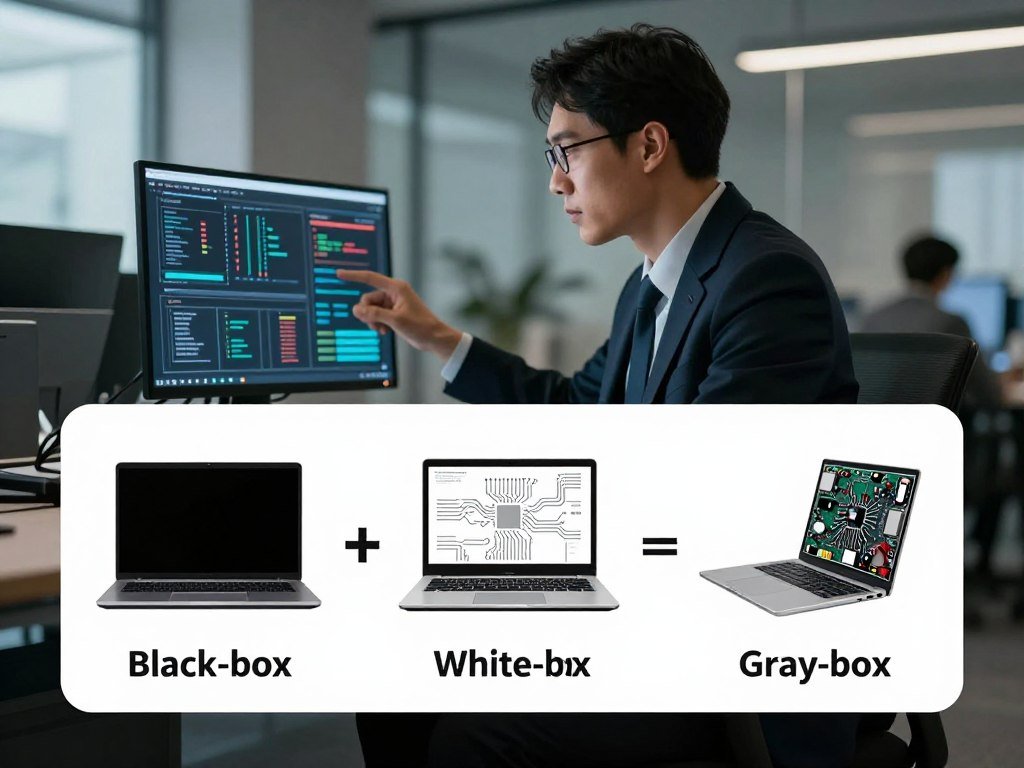
My scope document outlines which systems I’ll evaluate and what methods I’ll employ. It also specifies the level of internal knowledge I’ll receive beforehand. This preparation ensures my work remains focused and effective.
Selecting the Right Approach for My Test
I choose between three primary testing methodologies based on my specific objectives. Each approach offers distinct advantages for different security scenarios.
| Test Type | Information Level | Realism Factor | Best Use Case |
|---|---|---|---|
| Black-Box | No internal knowledge | High (external attacker) | Simulating real-world threats |
| White-Box | Full system transparency | Low (internal review) | Comprehensive code analysis |
| Gray-Box | Limited internal data | Medium (privileged user) | Balancing efficiency and realism |
Black-box assessments force me to rely entirely on external reconnaissance. This mirrors how actual attackers would approach my systems without insider knowledge.
“The right testing scope transforms random vulnerability hunting into targeted security improvement.”
White-box examinations allow me to identify architectural flaws with maximum efficiency. My company provides complete access to network diagrams and source codes.
Gray-box tests strike an ideal balance for many situations. I receive basic information but must still probe systems actively to discover vulnerabilities.
View vulnerability report
Conducting Reconnaissance and Vulnerability Analysis
The reconnaissance phase represents the critical first step where I gather intelligence about my target systems. This initial information collection lays the foundation for my entire security evaluation. I approach this systematically to build a comprehensive picture of potential entry points.

Gathering OSINT and Analyzing Networks
I begin with open source intelligence (OSINT) collection from public sources. This includes company documentation, news articles, and employee social media profiles. Each piece of data helps me understand the organizational structure and potential weaknesses.
My network analysis employs both passive and active techniques. Passive reconnaissance gathers information without alerting security systems. Active scanning then probes for specific vulnerabilities once I have sufficient intelligence.
| Reconnaissance Type | Information Source | Detection Risk | Data Quality |
|---|---|---|---|
| Passive OSINT | Public records, social media | Very low | Contextual insights |
| Active Scanning | Port scanning, service detection | Moderate | Technical specifics |
| Network Analysis | Traffic inspection, architecture | High | Infrastructure mapping |
“Thorough reconnaissance turns unknown risks into manageable security challenges.”
Identifying Critical Vulnerabilities in Applications and Infrastructure
I focus my vulnerability analysis on critical areas where data flows through the infrastructure. For web applications, I examine input validation and authentication mechanisms. Network infrastructure receives equal attention for configuration weaknesses.
My analysis identifies where security features might fail during actual attacks. This comprehensive approach ensures I cover all potential exploitation paths across the entire system.
Exploiting Vulnerabilities: A Step-by-Step Pen Test Process
When I move into the exploitation stage, I shift from identifying weaknesses to actively demonstrating their real-world impact. This hands-on approach validates the security gaps I discovered earlier.
Simulating Real-World Attacks
I execute various attack scenarios based on the specific vulnerabilities found. My testing includes SQL injections against databases and cross-site scripting against web applications.
I also simulate social engineering to assess employee awareness. Denial-of-service attacks test infrastructure resilience under stress.
Techniques for Exploitation and Post-Exploitation
Once I gain initial access, I practice vulnerability chaining to move laterally through systems. This process involves escalating privileges and accessing sensitive data.
I focus on maintaining persistent access while evading security monitoring. This simulates advanced persistent threat behavior realistically.
| Attack Type | Primary Target | Testing Purpose |
|---|---|---|
| SQL Injection | Database Systems | Data Integrity Validation |
| Cross-Site Scripting | Web Applications | Input Security Testing |
| Brute Force | Authentication Systems | Password Strength Assessment |
| Social Engineering | Human Factors | Security Awareness Evaluation |
Cleaning Up and Reporting Findings
After completing the exploitation phase, I meticulously remove all testing traces. This includes deleting backdoors and restoring changed configurations.
My final reporting documents every vulnerability exploited and access gained. The analysis includes specific remediation recommendations prioritized by risk level.
This comprehensive approach ensures my security assessment provides actionable insights for improvement.
View vulnerability report
Integrating Compliance and Industry Security Standards
Navigating the complex landscape of security compliance requires more than just checking boxes. My approach integrates regulatory requirements with established industry frameworks to create comprehensive protection.
This integration ensures my security services meet both legal obligations and operational excellence standards. I focus on creating audit-ready documentation that demonstrates due diligence.
Meeting Regulatory Requirements such as PCI-DSS and GDPR
My compliance-focused assessments validate that security controls function as intended. For businesses handling credit card data, I conduct regular external and internal pen tests as required by PCI-DSS.
Data protection regulations like GDPR and HIPAA mandate specific security measures. My testing verifies these controls effectively safeguard sensitive information.
Leveraging Standards like PTES, OWASP, and NIST
I structure my security assessment using then Execution Standard (PTES) framework. This provides a consistent seven-phase methodology from planning to reporting.
For application security reviews, I follow OWASP Testing Guides. NIST 800-115 techniques ensure thorough vulnerability validation across my company’s infrastructure.
These standards create a foundation for reliable security services that withstand regulatory scrutiny.
Penetration Testing Best Practices
Establishing reliable security practices requires more than just technical expertise; it demands a commitment to ethical principles and ongoing refinement. My approach ensures every assessment strengthens defenses without disrupting business operations.
Maintaining Ethical Standards and Continuous Improvement
I begin every engagement with proper authorization and clear scope boundaries. This ethical foundation protects sensitive data and prevents unintended system impacts. Regular pen testing schedules adapt to evolving threats.
I combine automated efficiency with manual expertise for comprehensive coverage. This dual approach eliminates false positives while identifying complex weaknesses. Third-party assessments provide fresh perspectives that internal teams might miss.
| Testing Approach | Frequency | Primary Focus | Business Value |
|---|---|---|---|
| Internal Assessment | Quarterly | Operational systems | Continuous monitoring |
| Third-Party Pen Test | Bi-annually | External perspective | Unbiased evaluation |
| Targeted Vulnerability Test | As needed | Specific applications | Focused improvement |
Following government recommendations, I implement a continuous improvement cycle. This includes remediation, verification testing, and policy updates. Clear documentation ensures stakeholders understand risks and priorities.
Advanced Topics in Penetration Testing
The security landscape evolves rapidly, demanding advanced assessment methods. I constantly refine my approach to address emerging threats and complex digital environments.
Innovative Strategies and AI Integration
I integrate artificial intelligence into my security workflows to accelerate vulnerability discovery. Machine learning algorithms help identify patterns that indicate sophisticated threat vectors.
Next-generation VAPT tools combine AI capabilities with traditional methodologies. This creates faster, smarter assessments of applications and cloud infrastructure.
My application security testing now covers modern architectures. This includes cloud-native applications, microservices, and containerized environments.
| Testing Focus | Traditional Approach | AI-Enhanced Method |
|---|---|---|
| Vulnerability Discovery | Manual scanning | Pattern recognition |
| Threat Analysis | Rule-based detection | Behavioral analytics |
| Cloud Security | Configuration checks | Anomaly detection |
Real-World Case Studies and Lessons Learned
I prioritize web application security by systematically testing against OWASP Top 10 vulnerabilities. This includes injection attacks and authentication failures.
Cloud services across AWS, Azure, and GCP require specialized approaches. I adapt my strategies for unique cloud security challenges.
Studying real breach reports helps me understand how attackers exploit production environments. These lessons make my testing more realistic and comprehensive.

Conclusion
My commitment to continuous security improvement begins with understanding real-world attack scenarios. This approach transforms vulnerability assessment from a periodic check into an ongoing strategy.
I recognize that effective security requires combining technical expertise with systematic methodologies. By simulating actual threats against my networks and applications, I gain critical insights into potential weaknesses.
Regular security evaluations across my entire infrastructure ensure comprehensive coverage. I leverage industry standards while staying current with emerging techniques to strengthen my defenses.
My team acts promptly on findings to remediate critical issues and harden systems. The knowledge gained from these assessments is essential for protecting sensitive data and maintaining business continuity.
This proactive approach ensures my security posture evolves alongside emerging threats, creating resilient protection for my company’s most valuable assets.